Espresso is over a beverage; in lots of metropolitan areas, It is just a social framework. Cafés form each day routines, affect urban layout, and signal how a city understands time, function, and community. To know a place’s coffee society should be to glimpse its further civic identification with me, Gus Woltmann.
Cafés as Urban Living Rooms
In several towns, cafés purpose as extensions of domestic Room—urban living rooms where non-public lifetime gently overlaps with public life. Unlike places to eat, which revolve all over foods and turnover, cafés are built close to presence. Only one cup of espresso can justify an hour of sitting down, chatting, looking through, or simply watching the earth move. This reduced-pressure ecosystem can make cafés Just about the most accessible sorts of shared Room in urban options.
Their significance lies in adaptability. Men and women use cafés in a different way each day: a morning stop for regime, a midday meeting put, an afternoon workspace, or an evening social setting. This fluidity makes it possible for people with distinctive schedules, incomes, and needs to occupy exactly the same natural environment without having conflict. Learners with laptops, retirees with newspapers, close friends in dialogue, and solo site visitors coexist easily, making a layered social ambiance.
Physically, cafés form the experience of streets. Outside seating activates sidewalks, turning pedestrian spots into social corridors. The presence of seated persons signals basic safety and vitality, encouraging others to slow down. Window seating connects inside and exterior life, making it possible for patrons to watch the city even though remaining sheltered. This Visible permeability strengthens the sense that urban lifetime is shared instead of fragmented.
Cafés also lessen social isolation. They offer a middle ground amongst being on your own and currently being in structured enterprise. Normal website visitors come to be familiar faces, even when they under no circumstances Trade names. Baristas recognize routines, producing modest times of acknowledgment that build a subtle sense of belonging. These repeated, lower-depth interactions enable variety weak social ties—connections that, whilst informal, lead drastically to a sense of Group.
Economically, cafés are compact businesses, but socially they carry out a public operate. They provide Room with no demanding official membership, tickets, or appointments. In metropolitan areas wherever non-public residences are compact or workspaces are rigid, this openness is critical.
By supporting lingering rather than hurrying, cafés encourage a slower, more observant partnership with urban life. They create places where people can exist without immediate intent, As well as in doing this, they humanize the town. By means of each day rituals of sitting, sipping, and sharing House, cafés come to be the dwelling rooms that provide urban environments heat and continuity.
Time, Rate, and Productiveness
Coffee culture reveals how a town understands time—not simply being a measurement, but like a lived encounter. The way people today consume coffee, how long they continue to be, and if the act is social or functional all sign further attitudes toward rate and productiveness. A cup of coffee results in being a little window into a town’s temporal philosophy.
In rapid-paced urban environments, espresso is frequently integrated into motion. Men and women order immediately, drink standing, or carry cups to go. Cafés are created for efficiency: minimal seating, streamlined assistance, and layouts that motivate flow rather then lingering. Listed here, coffee supports productiveness straight. It is actually gas, a stimulant that retains the workday relocating. Time is segmented, and breaks are brief interruptions in lieu of meaningful pauses.
In distinction, cities with slower espresso traditions deal with the work as a pause constructed into your day. Sitting down down is expected, not optional. Discussions unfold without seen urgency, and service aligns using this rhythm. The espresso break results in being a genuine use of your time, not a deviation from it. Productivity, With this context, isn't calculated entirely by output per hour but by sustainability—retaining Power, associations, and psychological clarity above for a longer period periods.
These variances condition urban knowledge. Where coffee is rushed, streets come to feel transitional, oriented towards destinations. The place it is actually slow, community Place feels more inhabited. Folks occupy in lieu of go through, creating a sense of continuity in everyday life.
Espresso rituals also impact work tradition. Extended espresso breaks can function casual Conference spaces exactly where Concepts are exchanged exterior official configurations. In faster cities, Skilled interactions may well keep on being more scheduled and structured, with much less area for spontaneous discussion.
Neither design is inherently remarkable; Each individual demonstrates local economic pressures, social norms, and historical click here patterns. Nevertheless, the contrast highlights a important distinction: regardless of whether time is taken care of largely for a source to enhance or being a medium where lifetime unfolds.
By day-to-day espresso behaviors, metropolitan areas quietly Specific their stance on this stability. A simple cup, taken gradually or rapidly, reveals how tightly or loosely the urban working day is held—And exactly how persons negotiate the connection among perform, rest, and presence.
Do the job, Creative imagination, and Third Spaces
Cafés often functionality as what sociologists connect with “3rd spaces”—environments that exist between dwelling (the main Place) as well as the workplace (the 2nd). These options are neither completely private nor formally Experienced, still they Engage in a substantial role in how fashionable urban work and creative imagination unfold. Coffee culture, With this feeling, shapes not simply social existence but also mental and economic exercise.
The attraction of cafés as work environments lies inside their balance of stimulation and autonomy. History noise, motion, and ambient conversation make a feeling of shared exercise without having immediate interruption. This lower-level social existence can enhance concentration and reduce the isolation connected to Functioning by itself. For freelancers, remote staff members, and college students, cafés present construction devoid of stringent oversight—a location to be productive even though still sensation Element of public lifetime.
This environment encourages informal Trade. Conversations overheard, likelihood conferences, or spontaneous discussions at neighboring tables can spark Tips that almost never emerge in controlled Office environment configurations. Historically, cafés are already associated with writers, artists, and thinkers Because of this: they provide publicity to diverse perspectives in a peaceful framework. The setting supports reflection although preserving people today connected to the Vitality of the town.
Cafés also lessen barriers to participation in Expert daily life. Not Anyone has access to private offices or co-Functioning memberships, but a cup of espresso grants momentary entry right into a purposeful workspace. This accessibility democratizes where function can take place, making it possible for financial and artistic exercise to distribute further than company environments.
Concurrently, the café imposes refined restrictions which might be successful. Seating is finite, interruptions exist, and time is loosely bounded by social norms. These constraints can encourage focus and prevent the overextension that often takes place in home-based work.
By supplying a middle floor concerning domestic consolation and Experienced formality, cafés condition how towns make Concepts. They foster a lifestyle in which perform and public lifestyle intersect, and where creative imagination is not really confined to studios or places of work but woven into every day urban rhythms.
Identity in a Cup
Espresso has become the smallest nevertheless most expressive markers of urban identity. Just how it is ready, served, and consumed reflects community heritage, taste, and social values. A city’s most popular espresso fashion—whether or not shorter and robust, huge and milky, sweet and spiced, or gradually brewed—reveals the way it balances tradition, modernity, and every day ritual.
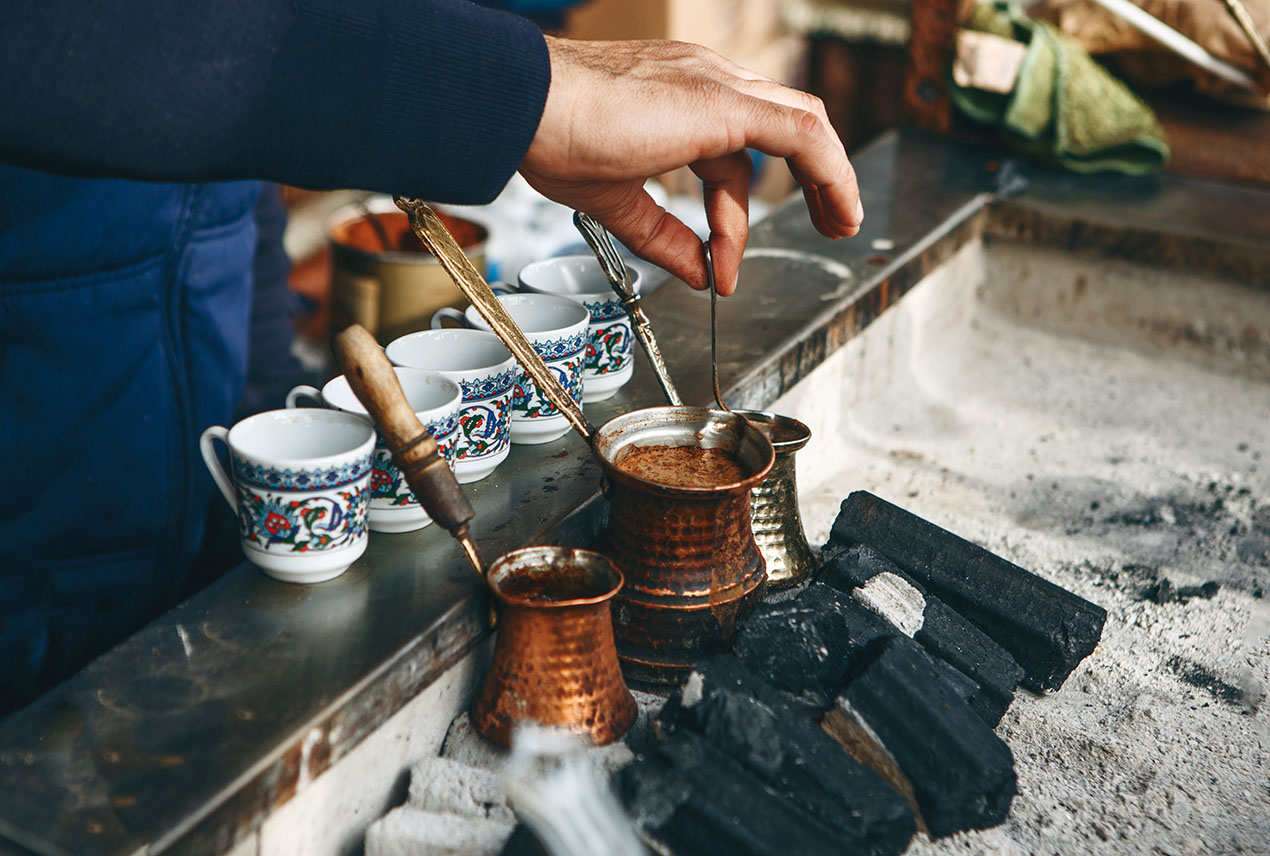
Preparing approaches frequently have historical continuity. Long-standing approaches, for example stovetop brewing, filtered techniques, or finely floor preparations, link existing-day drinkers to before generations. These approaches turn out to be cultural signatures, distinguishing a person area from An additional. Even the selection in between handbook preparation and automatic machines can sign attitudes toward craftsmanship and effectiveness.
Serving style also communicates norms all over hospitality and social interaction. Smaller cups might advise intensity and brevity; much larger servings can show comfort and ease and extended existence. Whether coffee comes with water, sweets, or foam displays anticipations about generosity and sensory expertise. The vessel alone—glass, porcelain, paper, or ceramic—signals if the instant is disposable or meant for being savored.
Taste preferences even more Categorical identity. Some metropolitan areas favor bitterness and toughness, Other people sweetness and embellishment. Additions for example spices, condensed milk, or flavored syrups often trace back to trade routes, colonial histories, or community agricultural styles. Via style, world influences turn out to be localized traditions.
Coffee terminology will become part of urban language. Being aware of ways to order appropriately marks insider standing, though unfamiliarity can sign outsider presence. In this way, coffee culture produces delicate social codes that form belonging.
In the long run, espresso rituals condense a town’s character right into a daily act. They present how men and women relate to time, satisfaction, and Group. Though consumed in minutes, a cup of coffee carries layers of cultural which means, quietly expressing who a city is And the way its men and women go from the working day.
Comments on “How Coffee Cultures Outline Cities By Gus Woltmann”